
Share Robert Lowe Cochrane's obituary with others.
Invite friends and family to read the obituary and add memories.
Stay updated
We'll notify you when service details or new memories are added.
You're now following this obituary
We'll email you when there are updates.
Select your format and elements to print

IN LOVING MEMORY OF Robert Lowe Cochrane
Robert Lowe
Cochrane
Feb 10, 1931 — Jun 17, 2021
Waynesboro
Robert Lowe Cochrane's Obituary
West Virginia lost one of its native sons and a proud mountaineer, Dr. Robert Lowe Cochrane, on June 17, 2021. Bob died peacefully in Waynesboro, VA at the age of 90 from failing health. He is survived by his two nieces Amy Lu Cochrane (David Granger) and Roberta Jo Cochrane (Daniel Ford); 4 grand nieces and nephews Isabel Granger, Sydney, Elliot, and Wesley Ford. His brother Thomas Joseph Cochrane passed away just three weeks after his death. His family was able to Zoom with him weekly throughout the Covid lockdowns and visited with him frequently in the last few months.
Born on February 10, 1931, in the Suncrest neighborhood of Morgantown, West Virginia, Bob was the second of two sons of Thomas Joseph Cochrane and Isabelle Durston Lowe (Cochrane). He often reminisced about raising rabbits and brewing root beer in the basement during the depression and working at Chestnut Ridge camp as a kid. Barely surviving a 22-caliber bullet through his lung while hunting as a teen, he remained an avid hunter. A 1949 graduate of Morgantown High School, he attended West Virginia Boys State in 1948 and was Monongalia County's 1945 recipient of the Knight of the Golden Horse-Shoe award for West Virginia History scholastic achievement.
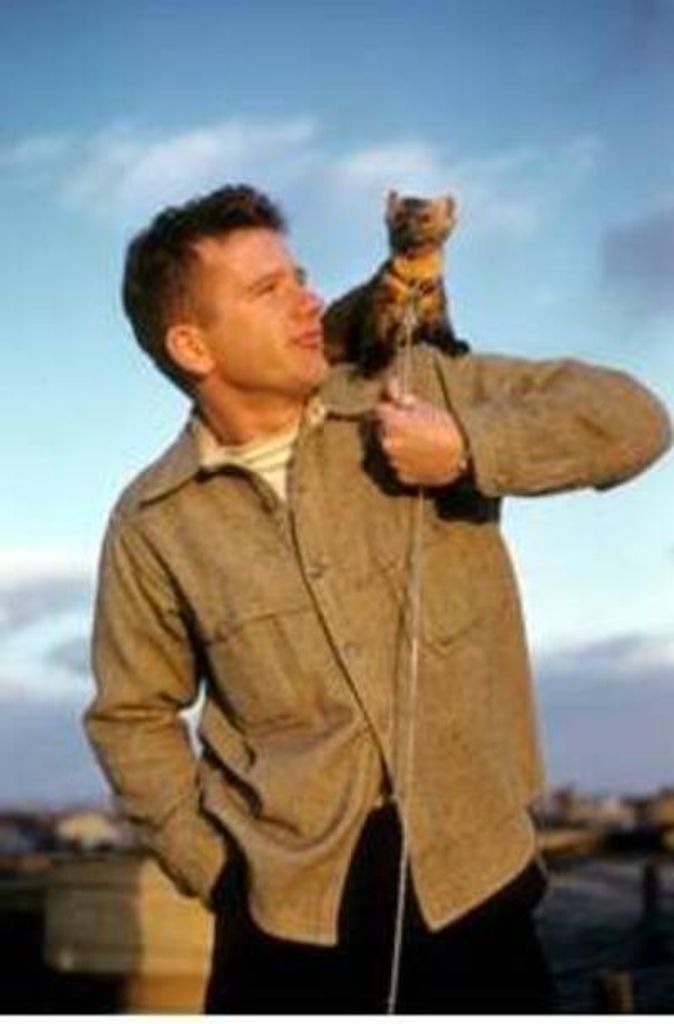
Bob received a B.A. (1953) in Zoology from West Virginia University, an M.S. (1954) and Ph.D.(1961) in Genetics with a minor in Zoology from University of Wisconsin, Madison. He studied the reproductive physiology and the genetics of coat colors for fur bearing animals including mink, ferret, fox and baum marten. During this time, he traveled to Petersburg, Alaska where he spent 3 months working at the U.S. Department of Agriculture Fur Experiment Station.
After his graduation, Bob worked for the U. S. Food and Drug Administration in Washington, D.C. (1961-1962) before traveling to England where he studied Primate Reproductive Physiology under the direction of Sir Solly Zuckerman at the University of Birmingham (1962-1965). On his return to the states, Bob spent a year at University of Pittsburgh Medical School (1965-1966). He began his industrial research career at Eli Lilly and Company in Indianapolis, Indiana as Senior Endocrinologist where he established their monkey research lab and reproductive colony (1966-1980). He also carried out reproductive physiology projects at G. D. Searle and Company (1980) and Marshfield Medical Foundation (1983).
Bob spent several summers during his youth with his aunt, Margaret Farrand, in Neillsville, WI, where he worked on Short's Fur Farm, owned by his cousins. Later in his career (1981-1983), he returned to the farm as an advisor and laborer, and later worked as a biologist at Northwoods Fur Farm. In 1985, he traveled to India as an FAO consultant to study the feasibility of fur farming in Kashmir for the Indian Wildlife Department. Bob retired to Morgantown in 1984 to take care of his parents. He was very proud of their contributions to West Virginia University. Isabelle was an instructor in applied design, Home Economics (1922-25), and Thomas was Assistant Chemist, West Virginia State Experiment Station (1922-28), adjunct faculty in the College of Engineering (1952-61), and head of the West Virginia State Road Commission Test Laboratories (1940s-1961). Bob was a life-long member of The First Presbyterian Church in Morgantown where his parents were active members during their lifetime in Morgantown.
Carrying on the family's dedication to West Virginia and the University, Bob joined the Division of Animal & Nutritional Sciences as an adjunct professor with the goal of developing classes and research projects that would help the people of West Virginia. He joined the teaching teams for reproductive physiology and values and ethics, and lectured in several other courses. Bob brought first-hand research experiences of his career in the pharmaceutical industry and government research. He reveled in teaching anatomy and physiology of the laboratory rat, and his vast collection of slides provided unique learning opportunities to the students. He had an extensive and invaluable collection of furs, which he used in demonstrations to various classes to give students rare professional insight into the fur industry. His historical knowledge and breadth of scientific knowledge made him an asset to both faculty and students. In his retirement, Bob became one of the world experts in the physiology of ruffed grouse. He independently and singularly established research into pen-rearing ruffed grouse, resulting in the largest colony of grouse raised from incubated eggs produced by males and females in his colony. He was among the first in the world to successfully raise grouse hatched in captivity. He personally financed the construction of "the house that grouse built," donating the building to the university on the Stewartstown Road farm. After 16 years, he discontinued his research, and donated all 256 birds, the equipment, and his notebooks to a conservatory group in New York tocontinue work with his widely recognized colony.
Bob valued community, volunteered his time, and gave freely of his finances to numerous causes. He was the only adjunct professor emeritus of Reproductive Physiology at WVU. He enjoyed serving as co-advisor on the WVU Block and Bridle Club, accompanying members on numerous trips, preparing students for the Midwest Quadrathlon Contest, and supervising the annual barbeque (served with his specially prepared sauce) held in conjunction with the Little Eastern Livestock Show. He drove for meals-on-wheels, generously supported the WVU Rifle Team, the Ruffed Grouse Society, and endowed funds at WVU for research on West Virginia native species.
Throughout his life, Bob was an avid hunter, fisherman, photographer and traveler, imparting his knowledge and experiences to family members, friends and many guests at Eat'n Park with his meticulously documented photographs. He was a connoisseur of bluegrass music, deeply knowledgeable about its history; his banjo and harmonica were favorite activities even as his health failed. He was an incredibly unique and intelligent individual, known for his quips (often emblazoned on his t-shirts), sharp wit, and brutal honesty. He had a passion for helping others and influencing his beloved West Virginia.
Bob's nieces will return him to Morgantown to be interred at Beverly Hills Memorial Gardens at a future date. Honorary donations in Bob's memory can be made to the WVU Rifle Team and sent to Jamie Hall, Mountaineer Athletic Club, PO Box 877, Morgantown, WV 26505.
Robert Lowe Cochrane's Guestbook
Visits: 99
This site is protected by reCAPTCHA and the
Google Privacy Policy and Terms of Service apply.
Service map data © OpenStreetMap contributors